DATA CENTER ONSITE SERVICES
Data Center Smart Hands & Relocation
Smart hands, remote hands and physical equipment relocation for data centers, colocation facilities, server rooms and labs. ALL I.T. coordinates and carries out approved onsite work, from a task inside one facility to a move between facilities, while your engineers keep technical direction.
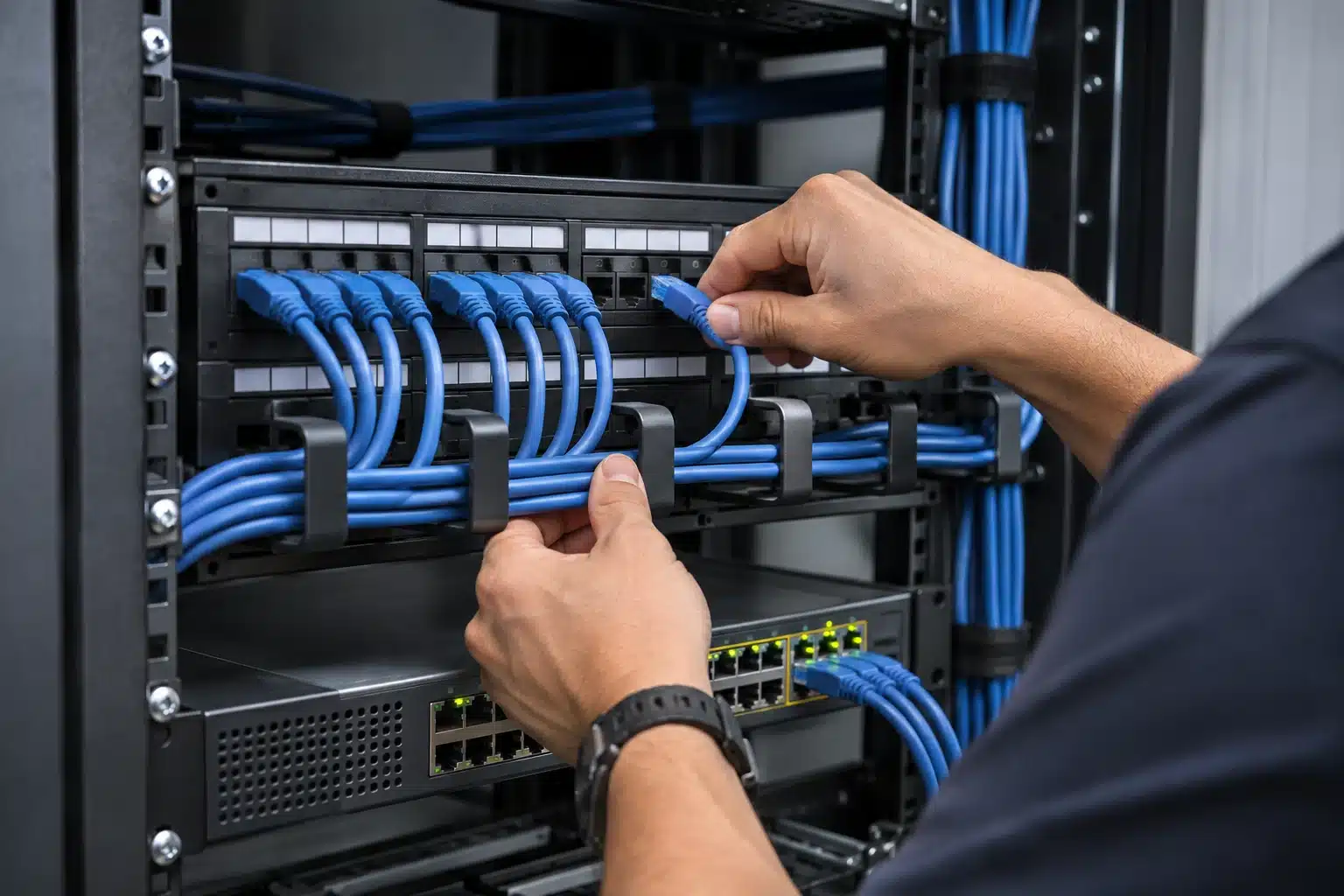
Choose the work your engineers need onsite.
A directed task, a rack change and a physical relocation need different preparation. We scope the work around your equipment, access rules, change window and available technical team.
| Work package | Typical physical tasks |
|---|---|
| Smart hands and remote hands | Console connections, authorized reboots, cable changes, visual checks and equipment swaps under your engineer’s instructions. |
| Rack and connection work | Rack-and-stack, approved equipment placement, cable organization and identified power or network reconnections. Specialist fiber work is scoped separately. |
| Site and rack discovery | Asset and serial records, rack positions, visible connections, measurements and agreed photographs for a change or move. |
| Physical equipment relocation | Labeled disconnect, de-rack, packing, carrier coordination, receiving, re-racking and reconnection, as included in the move plan. |
| Equipment retirement | Authorized removal, asset reconciliation, packing and handoff for return, redeployment or an agreed disposition route. |
Network hardware changes can be included with approved configurations and remote engineering support. Qualified resources, facility access and any operator requirements are confirmed for the assignment.
Get the onsite work into the change plan.
1. Share the facility and task
Send the location, equipment and preferred window. Start with the details you have.
2. Agree the visit
We review the scope, skills, access, technical participation and terms before arranging the work.
3. Review the result
Use the agreed checks, records and open-action list with your engineers to decide the next step.
Smart hands and remote hands inside your data center.
Give your remote engineers onsite help for console connections, authorized reboots, cable and optics changes, approved component or equipment swaps, rack work and visual checks. The technician follows the agreed task sequence or your engineer’s live direction.
Identify the assets, ports and permitted actions, with an available engineer who can authorize a stop or reversal. The return record captures the actions, observations and agreed checks. Your engineer validates the technical result and identifies any further system or application checks.
Prepare the work at each facility.
Confirm facility access and operator permissions, asset and port references, approved downtime, remote support and the checks needed before departure. Rack work also needs matched rails, mounting hardware, equipment weights, suitable lifting arrangements and power readiness.
If the records or conditions are unknown, a scoped survey can establish the inputs for the assignment. Use the site-readiness checklist to organize the details you have.
Moving from one data center to another
A physical move can connect data centers, colocation facilities, server rooms or labs. The plan separates work at the origin, carrier transport and the destination handover.
Plan both ends
Confirm access at both facilities, origin and destination rack/port maps, live-equipment exclusions, matched rails, weights and lifting needs. Check destination power and network readiness. Agree move waves, change windows, carrier responsibilities and shutdown/startup authority.
Disconnect, pack and hand off
After authorized shutdown, carry out the accepted disconnect and de-rack work. Match assets, rails and accessories to package IDs. The manifest and custody record identify what was released to the carrier and any retained or deferred items.
Receive, re-rack and reconnect
Reconcile quantities and visible condition at receipt; record missing or damaged items with owners. Re-rack and reconnect against the approved plan, then perform the agreed physical checks. Your system owners direct startup and validate systems and applications.
Freight, packing, insurance and specialist handling are defined in the quotation. This is physical equipment relocation; cloud, virtual-workload and application migration are separate. See the server-relocation planning guide.
Know what was completed and what still needs attention.
The work order selects the records needed for your review: affected assets and connections, performed checks, permitted photos, inventory or rack updates, and any missing parts or deferred steps.
The handover separates completed physical work from checks still awaiting your engineer, a vendor or the application owner. Use the completion record as a starting point for the format your team needs.
Keep physical support distinct from the wider platform.
This service covers accepted onsite tasks. Hosting, cloud or application migration, power and cooling engineering, and ongoing managed infrastructure operations are outside routine physical support. Independent engineering and specialist work require a separately agreed scope and suitable resources.
For a wider program or supplier review, use Enterprise Evaluation & Procurement and the service catalog to compare responsibilities and deliverables.
Questions before you plan the work.
Can you work under our remote engineer’s direction?
Yes. Share the task sequence, asset and connection references, access requirements and remote contact. Agree the actions, checks and stop or rollback authority before the work starts.
Can you provide rack-and-stack as part of a move or refresh?
Rack-and-stack can be scoped with matched rails, approved rack positions, handling needs and identified power and network connections. Configuration and system validation remain with your engineers unless separately included.
Does removing equipment include data destruction?
No. Removal and custody handoff are separate from sanitization or destruction. Any method, performing provider and required certificate must be expressly included in the disposition plan.
Can an MSP use this service for a client facility?
Yes. Agree the branding, site communication, escalation and reporting arrangements for the assignment. The MSP retains its client relationship and technical direction. See white-label onsite support.
LET’S PLAN THE ONSITE WORK
Start with the facility and the work.
Start with the location, tasks and preferred change window. Include the equipment, access and remote-support details you already have. We’ll follow up to review scope, resources and scheduling.
"*" indicates required fields
Your details will be used to respond to your inquiry. Privacy policy.

ALL I.T. coordinates and carries out onsite IT work for multi-location businesses and MSPs across the U.S. and Canada.
© 2026 ALL I.T. · Privacy policy